Sunday, 28 August 2022

Days of Thunder


Days of Thunder

The Champions League draw has given Celtic that much sought after blend of glamour and hope of progressing. RB Leipzig, Shakhtar and Real Madrid will provide a huge test for Ange Postecoglou’s side but there are grounds for at least a glint of optimism. Celtic is a developing young side with much potential and is capable of giving any team a good game at Celtic Park. Picking up points on the road might be more problematic, although Shakhtar are likely to play their home ties in Poland and forfeit home advantage due to the ongoing conflict in Ukraine. This could help Celtic as could the fact that Shakhtar have lost key players in the past year as the crises in Ukraine saw a UEFA ruling allow foreign players to walk away from their contracts. This infuriated the club as they had exchanged contracts with Fulham for the sale of winger Manor Solomon, only for Fulham to say following the UEFA ruling, we won’t be paying the agreed fee as we can now have Solomon for free. It remains to be seen what sort of side Shakhtar can field but they are no mugs and Ange Postecoglou will ensure Celtic are properly prepared.

 Real Madrid, the current Champions of Europe will provide daunting opposition but most Celtic supporters will approach those ties with a ‘nothing to lose’ attitude. Give it a real go and we’ll see where it takes us. We know the quality of players like Kroos, Benzema, Modric and Casimero, but we want to see the best at Celtic Park and test ourselves against them. Amid the bread and butter of the Scottish game, ties like this are a rare taste of caviar and we should all relish them.

The tie with Madrid comes a few days after the first Glasgow Derby of the season and Celtic Park is sure to be rocking on those two days of thunder. The atmosphere at such games is unrivalled and two of them coming in such close proximity will leave Celtic fans drained but hopefully happy. Which one would I rather win? If Celtic can’t win both then it’s an obvious choice that defeating Real Madrid would be epic. We play 4 or 5 derby matches in a season but haven’t faced Madrid in competitive action for 42 years. It’s a big dream getting a result from a team of superstars like Madrid but we’re allowed to dream. Teams like AC Milan, Juventus, Barcelona, Manchester United and of course Real Madrid have all fallen in the east end of Glasgow. The gap between the elite sides and the rest had widened hugely since George McCluskey and Johnny Doyle put Madrid to the sword in 1980 but you never know in football.

I got involved in a discussion online with a Celtic who suggested taking the flag of the second Spanish Republic to Madrid as a way of annoying the perceived right-wing element among the Madrid support. It was pointed out to him that the Spanish civil-war is still a raw topic in Spain as dreadful atrocities were perpetrated by both sides. We can see from the experience of the troubles in Ireland how the folk memory and bitter experiences are passed down the generations.

Celtic Ultras taunted Lazio’s fascist fringe with a banner depicting a dead Mussolini hanging upside down in Milan in 1945. It may have been that those thugs would have attacked Celtic fans in Rome anyway, but that banner made it more likely. Trips to Europe can be great fun and Celtic will take far more fans to Madrid than the 1800 tickets they have been allocated. However, it can be dangerous in some places too and it’s wise not to antagonise the more unhinged locals and in doing so put other Celtic fans in danger.

Season 2022-23 has got off to an exciting start and the Champions League draw has demonstrated the importance of European football to clubs like Celtic. Much as our I enjoy watching my team play anyone, there can be a degree of over familiarity when you face the same Scottish teams three, four or even five times in a season. Europe adds glamour, excitement and is the best test of how your team is progressing. It can be a harsh and unforgiving environment too and Celtic will need to take the chances that come along and avoid silly defensive lapses.

Postecoglou’s side is built to go after other teams and score goals but away from home in Europe will he need to be a little more pragmatic? Celtic have the players to play an intelligent counter attacking game but the manager may simply stick to his principles and set Celtic up to play in their normal style. Brendan Rodgers found out in Paris and Barcelona, if you go toe to toe with the best you can be on the end of some spankings but we want to be at the party with the best in the business and we’ll accept that risk as part of the deal.

There are exciting times ahead but as Ange will doubtless tell his side today, we need the points at Tannadice so put all thoughts of Europe and Glasgow Derby matches out of your mind and go do the professional job you are paid for. These nights in the champions league are won by being relentless in the SPFL. I expect a strong side to play today and put in a performance. Ross County in the league cup next week may be the time to wrap some key men in cotton wool for the challenges ahead but today Celtic need the points to return to the summit of the league.

I’ve seen some great teams and fantastic players play at Celtic Park over the years and I’m glad we’ll see some more this season. When that music plays and that roar goes up, you know you’re in Paradise. Bring it on.


Saturday, 20 August 2022

Renaissance Men


Renaissance Men

John Glass ran his hand across the thick stubble of his beard, ‘I tell you truly Andrew, the new piece of land is a suitable size but it is a former quarry and brickworks. It’ll take a herculean effort to fill in the great chasm and level it.’ The Marist brother nodded, ‘I’ll put the word out at Sacred Heart school and get the good Fathers to do the same at St Mary’s, St Michael’s and St Alphonsus. Sure, we had volunteers by the hundred when we built the first little stadium and we have grander ambitions now.’  The bearded Donegal man nodded, ‘Andrew, it will take tens of thousands of barrowloads of earth to fill this quarry. There is much water on the site too and God only knows where the old mine workings are. No one recorded where they tunnelled.’ Andrew Kerins smiled, ‘sure, we’re doing God’s work her, John. He’ll provide as he did in 88 and our people will respond to the call.’ John Glass smiled at his old friend, ‘sure you Sligo men could talk the birds out of the trees. We’ll put the word out that we want our able-bodied men on the site come Saturday morning.’

The site had been enclosed by a rudimentary fence for some time before the committee took out a lease on it. As John Glass stared at the huge hole in the ground that he had somehow to transform into a football stadium in six months, he sighed. ‘Bejesus, you could fit Dublin cathedral into that hole.’ The foreman coughed behind him to attract his attention. Glass turned, ‘Ah, tis yourself Pat. Are we ready to begin this arduous task?’ Pat Gallagher, an experienced builder from County Antrim nodded, ‘have a look, John.’ Glass turned to see scores of men walking towards the site in the light rain, the tools of their trades in their hands. They pushed wheelbarrows and carried planks of wood; one even led a horse onto the site. ‘Would ye look at that now,’ Glass said quietly, ‘our people have risen to the challenge again.’ He turned to Gallagher, ‘come, Pat. They’ll need direction and orders.’

A steady drizzle was falling over the hushed streets of Glasgow’s east end as Thomas Murphy trudged towards the meeting point. He puffed on his white clay pipe which was his constant companion. He had etched his initials onto it to ensure no disputes over ownership. Over his shoulder he carried the tools of his trade; a thick handled pick and a shovel. Dawn was slow to come on such grey days and a few smoking chimneys told him he was not alone in feeling the chill of this February morning. From the closes and Wynds of this, the poorest part of Glasgow, others trickled out to join him on his walk. Some pushed wheelbarrows while others brought a variety of tools required for the work at hand. Padraig Coll, a stout labourer who hailed from Belfast, joined Thomas on his walk. ‘Morning to ye Thomas. Not a pleasant day for our labours.’ Thomas nodded, ‘Aye to be sure Padraig but there’s much to be done and little time to do it.’ As the trickle of men reached a fenced off area adjacent to London Road, they could see that a hundred or more had already gathered around a horse drawn wagon upon which stood the familiar figure of John Glass. Thomas Murphy and Padraig Coll joined the small crowd of men and listened as Glass spoke. ‘Our first task is to fill the quarry and the old mine workings. We already have tons of earth on site boys so go where the Foremen send you and put your backs into it. Tis a fine endeavour you undertake this day and you have my thanks.’ With that the crowd of men entered the site for a day of hard labour.


The quarry hole in the centre of the site was over 30 feet deep and wide as a large church. The bottom of the quarry was covered in slimy water of uncertain depth and a stout rope was kept nearby in case anyone fell in. At the far end of the site a large hand pump was being operated to try to suck some of the water from quarry. Thomas and Padraig were assigned to the wheelbarrow squad who formed a continuous line from a huge mound of earth to the very edge of the quarry hole. Like a line of worker ants, the men shifted tons of earth and dumped it into the vast hole. As they worked Padraig Coll, a man noted for his fine singing voice and encyclopaedic knowledge of Irish folk songs, began to sing a familiar air…


‘Oh, tell me Sean O’Farrell, tell me why you hurry so,


Hush me Buchal, hush and listen, and his cheeks were all aglow


I bear orders from the captain, get you ready quick and soon


For the pikes must be together at the rising of the moon!’


From around the site, as the wheelbarrows squeaked along the planks laid over the mud and the hammers and picks swung in familiar rhythm, scores of voices joined the chorus…


‘'At the rising of the moon, at the rising of the moon


The pikes must be together, at the rising of the moon


Thomas barely looked up from his work as the men grafted and sang in that quintessentially Irish way. These men knew what a day’s work was and were in demand in the factories and docks of Britain because of it. Less than a mile north of where they laboured, the great Beardmore’s Iron works pumped black, acrid smoke into the Glasgow sky. Much of the muscle which kept the great steel works moving came from the poor Irish community which supplied the men who were giving up their one day of rest to make ready the land by Jean Field cemetery.


As the morning progressed and the large pile of earth began to diminish a huge Shire horse was brought in to haul timber across the site. As the small man leading the horse neared the wheelbarrow squad, they parted to let it pass. The big animal lumbered past them and as it reached a point near the edge of the quarry the earth began to crumble under its hooves. ‘Watch out!’ shouted Thomas as the earth gave way and the huge horse reared up before crashing into the quarry below. Thomas reached instinctively for the small man who controlled the horse and grabbed him by the jacket just in time to stop him joining the animal in the sludge of the quarry. As he did so his favourite clay pipe fell from his mouth and into the quarry hole. It was a small price to pay for saving the small man from joining his horse in the pit below where it lay in obvious distress, neighing forlornly.


A brief discussion was held and it was decided that as the horse had clearly broken a leg and was beyond rescue that they should put it out of its misery. A runner was sent to fetch a certain Mr Cleghorn who dealt with sick and wounded animals. He duly arrived carrying a long slim case which contained a rifle. The situation was explained to him and after a brief look at the horse lying 30 feet below him in the quarry he nodded sadly before he opened his case and assembled his long rifle. As the labourers paused in their work to watch, a loud, echoing shot split the quiet morning air and the horse’s suffering was over. Work resumed, although the men were a little quieter.


Padraig Coll turned to Thomas, ‘That was bad luck but we must continue nonetheless.’ Thomas nodded, ‘Aye, and my best pipe was lost in that hole too.’ Coll smiled, ‘Sure a pipe is easy to replace, yer man who lost his horse had a tear in his eye.’ Thomas nodded, ‘Aye, you’re right Padraig. All in a good cause though.’ As the earth was shovelled into the pit the horse was soon covered and lost from view. The hard work continued all that long day until darkness once more shrouded the city.


And so it was that community gathered together for 8 arduous weeks to create their field of dreams and give a fitting home to their team. The old stadium, barely 400 yards away was lost to a greedy landlord who had demanded a huge sum of money to rent it. This grated with many as greedy landlords back in Ireland had done the same to many and driven them from the land. The people had built that first stadium too and now they gathered again to build a second Celtic Park. There were those who would like to have seen the new club stillborn but it was people’s club and the people would never desert it. For men like Tommy and Padraig seeing the turf laid and the grandstand rise gave them immense pleasure.


As they walked home when their labours were over, Padraig smiled, ‘I look forward to seeing the Bhoys play on the new field. Tis a grand thing we’ve built here.’ Tommy nodded, ‘It is indeed and to think they’ll be running out over a ground which holds so much of our sweat and of course, O’Malley’s horse.’ Padraig Coll regarded him with a grin, ‘Sure it holds your pipe too, Thomas.’ Thomas Murphy nodded, ‘Aye, it does and I hope it brings them luck.’


Postscript: Glasgow 1994

Tony McCready eased his van carefully through the gates of the muddy building site. He stepped out to regard the huge steel frame of the North Stand rising into the east end sky. His workmate and lifelong Rangers’ fan, Andy Carrol, gazed at it too, ‘Looking impressive Tony but will your lot fill it?’  Tony replied, his eyes still on the huge skeleton of the stand, ‘I think we will Andy.’ A gruff voice cut across them, ‘Tony, get yer arse intae that trench and check they pipes. The concrete will be here at nine!’ Tony nodded towards the foreman and walked towards the trench cut into the muddy ground a few yards from where the Jungle terrace used to be. He clambered in, his boots splashing muddy water onto his jeans. As he examined the joints on the sewerage pipes something caught his eye. He reached into his toolbox and removed a small screwdriver and dug gently around a white object embedded in the wall of the trench. It came free in his hand and he dipped it into a bucket of water to clean the mud from it. ‘What have ye got there, Tony?’ asked Andy. Tony examined the small object carefully, ‘Looks like a smoking pipe?’ He noticed some letters etched onto it and what appeared to be a harp and a shamrock, ‘Looks Irish and it says, T. M, on it?’ Andy shrugged, ‘Well we’ll never know who dropped it but that’s your initials anyway so ye should keep it as a souvenir.’ Tony nodded, ‘Aye, I will. Wonder who T.M was though eh?’

Tony wrapped the pipe carefully in a cloth and placed it in his tool box. He’d find a spot for it somewhere at home and it’d remind him always of his time working on the new stadium. He turned back to the task at hand and playing his small role in the rebuilding of Celtic Park. He longed to see it finished and to hear those familiar songs echo around the new stands. He would always be proud of the small part he played in Celtic's renaissance.


Dedicated to the memory of the community who built the second Celtic Park and had it ready for it’s first game on 20th August 1892. We owe the founding community a great debt, we owe them Celtic.

Sunday, 7 August 2022

Let This Moment Linger


Let This Moment Linger

As a boy, I used to walk along the Gallowgate, holding my old man’s hand and I can still remember that first flush of anticipation when I saw the floodlights of Celtic Park illuminate the dark, winter sky. There was a magic about flowing with the river of people towards the stadium and feeling that you were following in the footsteps of all those countless thousands of people who have followed Celtic since 1888. It was as if you gave up part of your individuality and became part of something that was much bigger than you. There’s a point on my journey to Celtic Park where I turn the corner of Holywell Street into Janefield Street and the stadium Looms ahead like the great cathedral of football that it is. That old excitement I felt as a boy is still there and in honesty I hope it always is. I felt that feeling last Sunday as I turned that corner and viewed the new banners adorning the Jock Stein Stand.


The game against Aberdeen was preceded by a full stadium display set up by  and paid for by the fans. It was a memorable sight and one that set the stage for a game which Celtic controlled throughout although it took 75 minutes before Jota’s thunderbolt administered the coup de grace. It was a decent start to the season from Celtic and the feel-good factor from last season, when Ange’s revolution began, still resonates. There was a moment before the match when the whole stadium joined folk singer Liam McGrandles as he sang the wonderful old love song, ‘Grace.’ I glanced around at the packed stadium and let the moment linger, thinking, ‘yeh, it’s good to be home.’ This old place has been home to five generations of my family now and that sense of history lingers. I know it’s the same for so many Celtic families and I guess it always will be.


This weekend we saw Celtic’s ‘never stop’ attitude tested against a stuffy and physical Ross County side. Some lambasted their ‘park the bus’ tactics while others pointed out that if they were to open up they’d be picked off and perhaps lose heavily against superior opposition. It wasn’t pretty to watch at times but Celtic scored two fine goals in the latter phase of the game to secure three deserved points. Jota demonstrated against that he was an absolute steal at £6m, a fee Celtic paid for Chris Sutton 22 years ago. He had a hand in all three goals and possesses the skills needed to open these packed defences and perhaps even trouble some of the big boys in Europe.


There is no telling how the coming season will pan out, few predicted Celtic’s new side would gel so quickly last season and storm to the title, but we can be confident that Ange won’t accept any drop in standards. The team has had a full pre-season to recharge the batteries and work on their cohesiveness. Players like Hatate and Maeda got the sort of rest they needed after completing the J-League season before going straight into the thick of it in the SPFL with Celtic. This season will be somewhat truncated though as it will halt for a month after Celtic’s match with Ross County on 12th November as the World Cup will be taking place. Celtic will fly out to Australia for some sunshine then and play Sydney FC and Everton in the Sydney Super Cup. They will do this  minus any Japanese players selected for their national team in Qatar. No doubt Ange’s homecoming will be emotional for him and he’ll send out his side to win. He is the first Australian coach to manage a big European club and his success has been much lauded in his homeland.


The Champions League will also a huge challenge for Celtic given the quality of sides in the tournament. Pot one contains the likes of Real Madrid, Bayern Munich, PSG, AC Milan, whilst Pot 2 contains teams such as Chelsea, Spurs, Liverpool, Juventus and Barcelona. Pot three looks no easier with the likes of Dortmund, Napoli, Benfica, RB Leipzig and Inter Milan lying in wait. Make no mistake about it, this is the most challenging club tournament in the world and Celtic will need to put in pretty flawless performances to make an impression in the big boys’ playground. That being said, Postecoglou’s young side are playing in a style that may suit the European arena and will certainly give it all they’ve got. The supporters love those big nights under the lights and will show again that when it comes to atmosphere, Celtic Park is among the best in Europe. The club will gain from participation in the Champions League in a financial sense but also in terms of exposure around the world. Ange’s young side will also learn from playing against some of the best players in the world. You risk the odd spanking at that level of football but I’m sure we’d rather be at the banquet than watching with our noses pressed up against the window.


The fans, that constant heartbeat of Celtic, always look forward to a new season with optimism. They have an exciting young team to back and a manager who knows what he is doing. He said of the atmosphere at the Aberdeen game…

‘The crowd were unbelievable. You’ll never walk alone is outstanding and spine tingling. The thing about our supporters, they’re always on it, mate. We’ve just got to make sure we match it with our performance every week.’

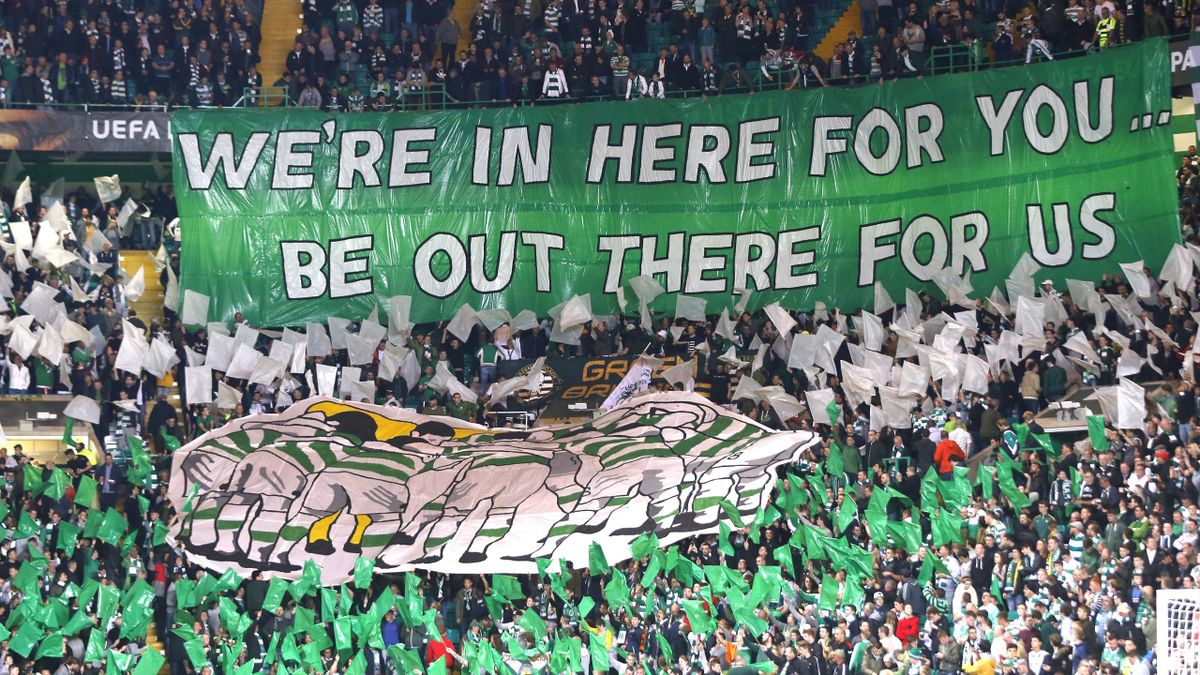
That symbiotic relationship between Celtic and their supporters is as strong as ever. They feed off each other and the energy of the supporters lifts the team, especially in those big European games. As a banner of recent years said: ‘We’re in here for you, be out there for us.’ I’m confident that Celtic will do well domestically this season and make a good fist of it in Europe. I’m certain the support will create a noise and spectacle in those big games that will have me looking around the old place and letting the moment linger.


Thursday, 7 July 2022

The heirs of Ratcliffe and Cormac


The heirs of Ratcliffe and Cormac

In 1933, the old Stormont Parliament in Belfast purchased a large painting by the Dutch artist Peiter Van Der Meulen for the princely sum of £209 and four shillings. The large painting was said to show the arrival of  William of Orange in Ireland and its unveiling in front of members was eventful to say the least. The large painting did indeed seem to show William astride his horse but the cheers of the assembled unionist members of Parliament turned to uproar as they inspected the painting more closely. In the top left-hand corner, sitting on a cloud appeared to be Pope Innocent XI, blessing William. In front of his horse stood a Dominican Friar, replete with rosary beads.

Of course, any cursory reading of history will tell you that the Williamite wars in Ireland were part of a wider conflict in Europe at the time, known as the ‘Nine Years War.’ It pitted the French against a ‘Grand Alliance’ which included Germans, Austrians, William of Orange and the Papal States under Pope Innocent XI, all of whom all wanted to curtail French expansionism. Pope Innocent was on the side of those who opposed the French and as William of Orange was an ally in that struggle, he naturally wanted him to defeat King James in Ireland. Indeed, it has been noted that upon hearing of William’s victory, Pope Innocent ordered the bells of Rome to be rung in celebration.

The painting unveiled in Stormont that day in 1933 appeared to show this Papal support for William and it was a little too much for some to take. The mythology of 1690, the Boyne and Aughrim would have us believe that the Protestant forces of King William defeated the Catholic army of his father-in-law King James, but in reality, both armies had soldiers from both denominations among their troops. That a painting on display in the self-proclaimed, ‘Protestant parliament for a Protestant people’ demonstrated the Catholic church supporting William caused what some describe today as cognitive dissonance; that feeling that one’s thoughts and beliefs may not be based on firm evidence.

The painting was vandalised by Scottish visitors to the Parliament in May 1933. Mary Ratcliffe, wife of the leader of the Scottish Protestant League, Alexander Ratcliffe and Charles Forrester attacked it for its ‘Papish content.’ Mrs Radcliffe slashed it with a knife and Forrester threw red paint over the image of Pope Innocent. Both were arrested and fined £65. (Over £3000 in today’s money) The painting was restored, although mysteriously the Dominican Friar’s rosary beads were painted out during that process. It was then quietly stored away out of sight for decades.

Alexander Ratcliffe, the husband of the woman who slashed the painting, was the founder and leader of the Scottish Protestant League, a Glasgow based  political party which between the wars gained as much as 23% of the vote in local elections. He wrote such ‘classics’ as ‘The truth about the Jews,’ ‘Evolution: Hell with the lid off,’ and came from that dour Calvinistic tradition which saw life as a test to be endured. His abiding hatred though was of Catholicism and the Irish population of Scotland who he petitioned to be expelled from the country. In the end he became a fully-fledged fascist after visiting Nazi Germany in the late 1930s. He was still writing anti-Catholic and anti-Jewish pamphlets during the war and was among the first Holocaust-deniers in Europe.

In Edinburgh a sister party, the ‘Protestant Action Society arose with similar aims although the British Union of Fascists support for Irish unity saw the PAS attack their meetings. Their leader, John Cormac, became something of a rabble rouser and used the press to mobilise his supporters onto the streets. He also had a knack for self-promotion and when the Town Council bestowed the Freedom of the City to, among others, Australian Premier, Joseph Lyons, Cormac, realising Lyons was a Catholic disrupted the ceremony by shouting, ‘No Popery!’ and ‘Down with the Papes!’ He was ejected from the hall and a disapproving press described his outburst as ‘unseemly.’

When it was announced that the Catholics of Edinburgh were organising a Eucharistic Congress in the city in the summer of 1935, Cormac found a new avenue for inciting the mob. He forewarned what might happen and even wrote to the newspapers in advance saying…

‘When, and where the Popish Authorities openly propagate their blasphemous doctrine, we, the Protestants of Edinburgh will turn out in Protest. We are Protestant “Actionists” not jelly fish. If the papists are allowed to hold a Eucharistic Congress in June, 30, or 40 thousand, Protestants will know the reason why.’

After one of his rallies in the Usher Hall in Edinburgh, his audience were so roused by his fierce anti-Catholic rhetoric that some left the hall in an angry and confrontational mood. One newspaper reported their actions with the following words…

‘After the meeting the most disgraceful scenes were witnessed. Concerted attacks were made on a number of buses. Stones were thrown at them and their windows broken - and their occupants injured. One of the oldest and most respected Priests in the diocese was a passenger in one of the buses along with a number of his school children. All the windows of that bus were smashed and he himself was struck by a stone and narrowly escaped serious injury from a second missile. Other buses containing women and children were also attacked. A Priest walking on the street was struck by a man with a knuckle-duster or similar weapon and his face cut.  He took refuge in a passing motor car which was stoned and a lady passenger struck. An English Priest, a guest of Lord Moncrieff, was assaulted earlier in the evening, and a number of others were only saved by the intervention of Police or civilians.’

A letter from a Protestant clergyman to the Scotsman newspaper laid these outrages at the door of Cormac. He wrote…

‘Those actions aroused the lowest form of bestial hate in the tatterdemalions (raggedly dressed folk) of Edinburgh who acclaim superiority to ‘Popery’ by howling foul blasphemy, attacking women, isolated groups of Catholic men and even Priests.’

When the Eucharistic Congress began on a fine June day, 170 buses brought Catholics to the city. It is estimated that some 15,000 attended the Congress in the leafy suburb of Morningside. They were met by a crowd of 20,000 demonstrators led by Cormac. Buses were stoned, people assaulted and Edinburgh’s Police force had their work cut out defending the men, women and children attending the religious gathering. The ensuing riot, in which the Police were not slow to deal with trouble makers, is one that modern, cosmopolitan Edinburgh would like to forget.

Archbishop McDonald wrote to the Secretary of State for Scotland and was himself clear that the mob had been incited by the ‘inflammatory language used by speakers like Cormac. He informed the Secretary of State that the Catholic men of Edinburgh were already forming defence committees and would defend their people. In fairness, the Police, the majority of the press, the courts and the civil authorities were hard on the bigots and many were brought to book. The Lord Provost, Louis Stewart Gumley, himself born in Dublin before moving to Edinburgh in his youth, said of the mob…

‘The sectarian spirit is a heady thing and some people seemed to have lost their moral and mental balance over this subject. Every honest minded British citizen deplores the Jew baiting in Nazi Germany, we want no baiting of Roman Catholics here. There is enough ill will in the world, and even in our own country without adding the fires of religious fanaticism to it.’

It was interesting to note that during an Orange Parade in Edinburgh in 2014, a Channel 4 news reporter asked Orangemen why the words ‘No Popery’ appeared on one of the banners. He was told, rather unconvincingly, that whilst the Orange Order abhorred the doctrine of the Catholic Church, it did not hate Catholics. A senior Orangeman then said that the banner should not have been there. Had the news reporter known his local history, he would have seen that the man pictured on the banner was none other than John Cormac, Orangeman and chief rabble rouser at the time of the Edinburgh riot of 1935.


The Orange Order has a somewhat uncomfortable time explaining its attitude towards Catholics and those of Irish extraction in Scotland. For the average Catholic in the street to see banners portraying men like Cormac or Bill Campbell, a Scottish UVF bomber who blew up Catholic pubs in Glasgow, is disconcerting. As is the playing of tunes at parades which pander to the element described as ‘tatterdemalions’ in 1935. Some may well be decent, evangelical Christians with no hate in their hearts for anyone but each year their parades lead to tasteless scenes it’s hard to reconcile with Christian love and tolerance.

I spoke to a Catholic friend recently who was caught up in one of this month’s parades in the Partick area of Glasgow. She found it both sad and intimidating. That’s the reality for some of our fellow Scots as the heirs of Ratcliffe and Cormac march through our streets.


Thursday, 23 June 2022

A Beautiful Life


A Beautiful Life

Watching the articulate and intelligent Mick Lynch, General Secretary or the RMT, comprehensively school some of the lightweight, minor celebrities who pass as journalists these days has been both gratifying and amusing. Mick, the son of Irish parents, who left school as a sixteen- year-old to work in the building trade, knows his stuff. He also knows the historical and cultural context the trade union movement. When asked by one hapless interviewer who his hero was he replied…

‘James Connolly. Do you know who James Connolly is? He is an Irish, Socialist Republican and he educated himself and started non-sectarian trade unionism, in Ireland and was a hero of the Irish revolution.’

Mick Lynch is being lauded by those on the left in the UK for speaking truth to power in a way the Labour Party has avoided for 30 years. The smug elites are not fond of articulate advocates for the working class and we can expect the right-wing press to try and discredit Lynch in the same scurrilous manner they destroyed Jeremy Corbyn. Mr Lynch is unlikely to be cowed though by the childish comparison to a Thunderbirds puppet ‘evil mastermind’ but the fact the tabloids are trawling his Facebook page and looking through his bins is a sign that the usual suspects are looking to distract from the message by attacking the messenger.

James Connolly would have recognised these tactics from the more conservative forces in his day. His time living off the Falls Road in Belfast demonstrated clearly to him how carefully fostered sectarian divisions were used to keep the working class at each other’s throats; rather than seeing the real enemy which was exploiting both communities. When he saw the social and housing conditions both communities lived in, he described it as, ‘tuppence against tuppence ha’penny.’ He also witnessed a cynical Tory Party ‘play the Orange card’ in order to support their own selfish party-political interests in Westminster. In the end, the partition of Ireland which Connolly warned against became reality and his words spoken in the years before partition became prophetic…

‘Here in Ireland the proposal of the Government to consent to the partition of Ireland – the exclusion of certain counties in Ulster is causing a new line of cleavage. No one of the supporters of Home Rule accepts this proposal with anything like equanimity, but rather we are already hearing in Ulster rumours of a determination to resist it by all means. It is felt that the proposal to leave the Home-Rule minority at the mercy of an ignorant majority with the evil record of the orange party is a proposal that should never have been made, and that the establishment of such a scheme should be resisted with armed force if necessary. I entirely agree with those who think so; Belfast is bad enough as it is; what it would be under such rule the wildest imagination cannot conceive. Filled with the belief that they were after defeating the Imperial Government and the Nationalists combined, the Orangemen would have scant regards for the rights of the minority left at their mercy.’

Connolly did not live to see Ireland divided into two states. In the north, a ‘Protestant state for a Protestant people’ was proclaimed despite a third of the citizens being Catholics in 1922. There was intimidation, discrimination and blatant electoral Gerrymandering to maintain Unionist hegemony in places like Derry where 75% of the population was nationalist. In the south, the Catholic church was given influence and power far beyond what was healthy in any land. Connolly would have despaired. The working-class solidarity he so badly tried to foster was ripped apart and has yet to recover.

His revolution, based on the socialist principles he espoused all his life, died with him in the stonebreakers yard at Kilmainham jail. The conservative forces of church and commerce guided the Irish Free State in a different direction and perhaps reminds us of one of his more famous quotations…

If you remove the English Army tomorrow and hoist the green flag over Dublin Castle., unless you set about the organization of the Socialist Republic your efforts will be in vain. England will still rule you. She would rule you through her capitalists, through her landlords, through her financiers, through the whole array of commercial and individualist institutions she has planted in this country and watered with the tears of our mothers and the blood of our martyrs”

James Connolly would approve of Mick Lynch’s articulate defence of the interests of his union’s membership. He may also concede that the average worker today lives in far better social conditions than those he would have seen in the slums of the Cowgate, Dublin or Belfast but I’m sure he would echo the point that most of the gains made by ordinary people in areas such as the NHS, welfare, workers’ rights and housing, was made possible by ordinary people organising and fighting for them. We should not forget that Churchill’s Tory Party fought against the establishment of the NHS and voted against it 21 times, but the Labour landslide at the 1945 election saw the Bill passed in Parliament.

We may face a summer of discontent as inflation spirals and various workers groups strike to protect their standard of living. Mick Lynch pointed out the hypocrisy of bosses telling workers to tighten their belts while they rake it in with bloated salaries and huge bonuses. We live in an era where the rich are getting richer and many of the poorer folk in society are struggling. Who can blame them for demanding a fairer system? The traditional link between the trade unions and the Labour Party may not be what it once was, but the fact that many ordinary people support the railway workers and see the obvious bias in media reporting of the dispute is telling.

Mick Lynch’s hero, James Connolly paid the ultimate price for trying to change society for the better. His daughter Nora went to see him on the evening before he was shot and reported this exchange between Connolly and his wife Lilly…

‘When we got into see my father he said, ‘well Lilly, I suppose you know what this means?’ She said, ‘oh no, oh no not that.’ He said ‘yes, Lilly.’ She broke down then and she said, ‘what a beautiful life James, such a beautiful life.’ He said, ‘wasn’t it a full life Lilly and isn’t this a good end?’

James Connolly gave his life trying to create a fairer society and better conditions for those crushed by poverty. The sectarianism he despised so much means that even today, some in the land of his birth refuse to recognise him as the champion of the poor he was. He sought to bring about change by revolution rather than evolution and was in that regard, a man of his time, but his courage and self-sacrifice are undeniable, even to those who refute his politics.

Mick Lynch chose his political hero with the same intelligence and understanding he uses to demolish the journalists who interview him. Connolly was clear what he wanted to see in Ireland and indeed around the world, when he said…

‘The Irish people will only be free when they own everything from the plough to the stars.’

That dream may never become reality but it won’t stop many fighting for a fairer, more equal society.


Saturday, 18 June 2022

The Right Thing


The Right Thing

Irish folk singer Christy Moore appeared on BBC Radio’s ‘Desert Island Discs’ programme some years ago and, being a fan of his music, I recall tuning in to hear it. Moore is known for his considerable musical skill and penning songs which reflect a left-wing political outlook on life. His music was a commentary on the times he lived through and in albums such as H-Block and The Spirit of Freedom, he made plain his views on the situation in the north of Ireland at that time. Indeed, the launch of his album ‘H Block at the Brazen Head pub in Dublin was raided by the Irish Special Branch in 1978 and all attending were quizzed by the Police. All of the albums were seized in the raid and Moore relates that years later he spoke to some of the detectives who were on the raid. Such was the ambiguity of the times, they said most of them kept a copy at home and it was among their most treasured possessions.

Christy spoke honestly about why he stopped being sympathetic to the armed struggle in the north. When asked why he stopped supporting the IRA he said, ‘I suppose Enniskillen, then Warrington and proxy bombs. It was just the end of the line for me.’  For a traditionally stuffy radio show, Moore’s contribution was honest and open especially about his politics, his health breakdowns and his struggles with alcohol and anger. These days he is in his seventies and is as busy as ever. I’ve seen him live on a few occasions and from the more raucous shows at the Barrowland to the more sedate nights at the Royal Concert Hall, he remains a fine performer.

The reason I’m talking about Christy Moore today is that he came on a journey with so many people of his generation. He saw the very real injustices of what was going on in Northern Ireland and commented on them in his life and music. In the end the violence and the cruelties of those times led him to the conclusion that there had to be a better way. Christy’s appearance on the show came at a time when the peace process was starting to bear fruit and Martin McGuinness and Iain Paisley were working together to make a better future for the people they represented.

Those of us who have regularly attended Celtic games over the course of our lives have met a lot of great folk from the six counties who lived through things we on the other side of the water can scarce imagine. I used to sit by an older chap in the Jock Stein stand, who hailed from Belfast and we’d talk regularly about his experiences growing up and living through the Troubles. He spoke not only of the violence and injustice he saw but also of the spirit, resilience and decency of so many people just trying to get by in a horrendous situation. He was old enough to have watched Belfast Celtic play but his heart was always with their cousins in Glasgow. His journey to watch Celtic began  in the early hours of the morning and took a coach and a ferry to get him to the hallowed ground he loved so much. He never once bad mouthed anyone but rather told his tales of the things he and his community endured with a kind of weary sadness. When peace came in the late 90s, he told me the best thing about it was not worrying about his children whenever they went out.

The peace has endured despite the efforts of a misguided few to try and return to the past. Of course, the scars are still there, especially for the older generation who endured things we can only imagine. It will take generations for the hurt to subside and the truth to emerge about what really went on in those years. Some, alas will never find justice for their loved ones and will live with that all their days but at least there is compensation in the fact that their children and grandchildren will know better days.

My grandfather, whose name I bear, fought for Irish freedom when he returned from the trenches of World War One. In my memory, he is the grey-haired old chap who sang, ‘The Rose Of Tralee’ at family parties. It would be hard to imagine that old gentleman as a young man with a rifle in his hand but he did what he thought was the right thing in his own life.

Doing the right thing is, I guess, the point of today’s article. We saw images of Celtic supporters in Las Vegas singing about the IRA this week and the tabloids made a big fuss because of the presence of a few celebrity Celtic fans. There has been an upsurge in such songs in recent years, especially at away games and much as I don’t have a problem with people singing songs which reflect their heritage and outlook, I do question the necessity to sing them at Scottish football matches or linked events. If you choose to sing such songs then you accept the damage it does to Celtic’s reputation.

Celtic have fans from all walks of life and the ideals the club was built on should be borne in mind by all who follow the Hoops. The team was integrated from its earliest years and rejected the narrow-minded sectarianism others adopted. The support is increasingly diverse and some of my best friends who follow Celtic are neither of Irish extraction nor Catholics. We are a broad church now and should avoid anything which might make our fellow supporters uncomfortable.

I’ve written such words before and have been called childish names by a mostly younger element with no real knowledge of what occurred during the darker days of the troubles. If wanting Celtic to be an inclusive, modern club makes me a ‘soup taker’ then that’s fine by me but at least get a good book or two about the troubles and educate yourself first. They were dark times and no one came out of them unsullied; not the paramilitaries, not the security forces and certainly not the politicians on all sides who failed miserably.

We in Scotland were thankfully spared the things they endured despite the efforts of a misguided few to import the troubles here. We can be thankful for that and hope our cousins across the north channel have many years of peace ahead. As Seamus Heaney wrote…

‘History says, Don’t hope
On this side of the grave,
But then, once in a lifetime
The longed-for tidal wave
Of justice can rise up,
And hope and history rhyme.’

Saturday, 4 June 2022

Yer ain folk


Yer ain folk

Some years ago, I attended a sports dinner at a masonic hall in Glasgow. I was keen to listen to two greats of Scottish football, Tommy Gemmell and Willie Henderson, regale us with tales of their days as players. It was, in fairness, a terrific event with much laughter and poignancy as the two ex-pros brought to life the golden age of Scottish football. During the interval, I lined up to buy some drinks at the small bar and got into conversation with a middle-aged chap. We discussed the stories the two old players had been telling and had a laugh as we waited to be served. As the conversation ended, he leaned closer to me and said, ‘enjoy the rest of your night, pal. It’s great being wi yer ain folk, none of that manky mob around.’ At that moment, my brother called to me, ‘Pat, make that three lagers.’ The man’s face changed completely when he heard my name and he looked the other way obviously mortified.

As tales of everyday sectarianism go, it’s pretty tame stuff. We’ve all seen and heard much worse but it illustrates that people are more open, more themselves when they think they are among their ‘ain folk.’ This was illustrated fully in that despicable video circulating online of people in an Orange Hall in County Down singing and laughing about a young Irish woman who was murdered on her honeymoon. As examples of moral degradation go, it was pretty near the bottom of the barrel. How many other such examples of sectarian stupidity are kept hidden because people are among their ‘ain folk?’

Of course, decent people of all hues condemned the incident unequivocally. Linfield Football Club terminated their relationship with a coach who took part in the vile singalong. The club, long associated with the unionist community in Belfast, has tried hard in recent years to educate the less enlightened element among their supporters but just as with Rangers in Scotland, there are those who don’t want to change. Linfield’s biting and severe statement made clear their abhorrence of the naked sectarianism on display in the Orange hall and are to be commended for speaking out.

A couple of those involved have apologised for their actions although some have suggested the only thing they are truly sorry about is being caught. In the age where camera phones are ubiquitous, there is a steady stream of videos of people being ‘themselves’ when they think no one is watching or they’re among their own kind.

The Orange order has said it will investigate the goings on at the Orange hall and take disciplinary action if necessary. The nature of the organisation suggests this is a bit like marking your own homework. There is surely a manifest flaw in an organisation which will not tolerate Catholicism nor accept Catholic members, investigating patently anti- Catholic behaviour? This wasn’t just bad taste, this song was written by an adult, learned and known by multiple people in the room and target solely at a young woman and her family because of their background. There is a deep flaw in the psyche of people who can’t accept others because they are different from them, even in relatively small ways.

If these videos which slip out onto the internet now and then teach us one thing, it is that some hide their hatreds behind a mask of respectability but sometimes that mask slips and we see their true face. Perhaps the tsunami of disgust and criticism coming their way now will teach them the lesson that more and more people reject this sort of behaviour. I hope they learn and grow as human beings but perhaps some will just learn to keep the video phones off in future. One Irish newspaper put it succinctly….

‘Congratulations to those who sang that vile song about Michaela McAreavey: you’ve successfully united the public and all politicians and commentators in utter revulsion against you. For all of us who have seen the video, it was hard to feel anything other than disgust watching a group of men, in a room decorated with Union flags and Orange Order paintings, join in chorus to sing a horrible and insulting tune they all clearly knew so well. They laughed and joked with each other and raised their arms in celebration.’

Human beings seem tribal by nature, perhaps a remnant of our hunter-gatherer past and in places where disparate groups have been forced to live together by history or by chance, there will always be some who blame the ‘other’ for some misfortune. The legacy of Ireland’s history from colonisation, plantation, partition and the horrors of conflict, have left deep wounds that are far from healed. That being said, we are all human beings and we know in our hearts that some things are just plain wrong.

Of course, no individual and no community should smugly think they don’t have their share of fools and knaves among their number. I’ve written recently about a small minority of Celtic fans who seem not to care a jot about the principles the club stands for and seek to revive tired old songs rejected by the bulk of the support before they were born. It’s up to us all to live up to the best ideals of our club and say no to intolerance of any sort. We Celtic fans know well the feeling of comfort and comradeship being together creates. It is a powerful bond that has been moulded through the generations and has come through some hard times. I hope that being among our ‘ain folk’ is never an excuse for denigrating others. As a wise man once said…

‘ Integrity is doing the right thing-even when no one is watching.’

We could add to that… even when you’re just with your ‘ain folk.’